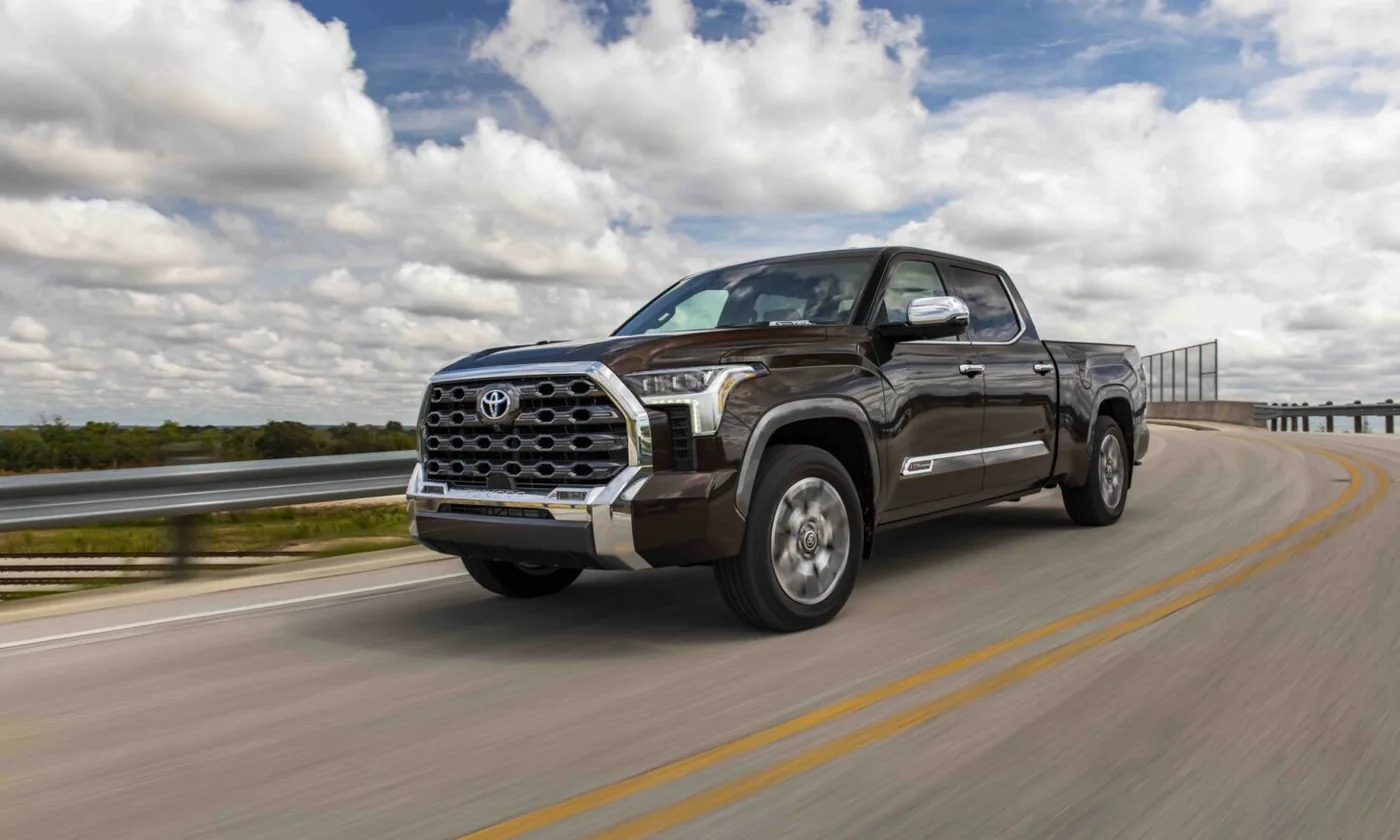
What should a Tundra plan begin with?
Begin with model year, grade, Double Cab or CrewMax, bed length, wheelbase, drivetrain, i-FORCE or i-FORCE MAX powertrain, TRD package, suspension, wheels and tires, payload label, towing equipment, normal passengers, cargo, trailer use, and current modifications.
The Tundra's width, wheelbase, rear overhang, bed load, and accessory mass affect trail access, breakover, departure clearance, steering, braking, and recovery. Build around the routes and representative loads the truck will actually carry.
Configuration details that change the plan
A grade name is a starting point, not a universal specification. Verify model-year equipment on the individual truck.
SR and SR5
Confirm drivetrain, cab, bed, factory tires, tow hooks, protection, differential equipment, payload, and towing configuration before planning additions.
Limited, Platinum, 1794, and Capstone
Large wheel packages, comfort equipment, AVS, rear air suspension, powertrain, payload, and tire sidewall can change the trail and lift plan where fitted.
TRD Off-Road
Inventory the actual Bilstein damping, skid protection, tire package, traction features, and locking differential equipment for the model year.
TRD Pro
Treat its i-FORCE MAX powertrain, 1.1-inch front lift, FOX internal-bypass dampers, TRD control arm, protection, wheels, and tires as a specific factory system.
Trailhunter
Apply this name only to the officially announced 2027 SR5-based package with Old Man Emu suspension and its model-year equipment.
Cab and bed
Double Cab and CrewMax passenger space, wheelbase, bed length, rack span, storage, departure clearance, payload, and towing use change the plan.
Powertrain and load
i-FORCE and i-FORCE MAX availability, curb weight, payload, axle load, towing equipment, cooling, and tongue weight must be checked on the actual truck.
Match the plan to how the Tundra is used
Daily driver
- Prioritize
- Condition, tire pressure, braking, steering, visibility, ride, parking, weather use, and useful bed security.
- Can wait
- Heavy armor, large offset changes, or permanent camping equipment without a regular need.
- Confirm
- Cab, bed, passengers, commute, parking, normal cargo, factory tires, payload, and highway behavior.
Mild trail and remote access
- Prioritize
- Suitable tires, airing equipment, rated recovery, recovery-point verification, essential protection, and route clearance.
- Can wait
- Lift when factory capability and careful line choice already match the route.
- Confirm
- TRD equipment, trail width, surface, wheelbase, recovery provisions, protection, tires, and load.
Towing and work
- Prioritize
- Truck-specific ratings, hitch, tongue weight, payload calculation, axle load, brakes, tires, cooling, and stable handling.
- Can wait
- Suspension changes used to hide overload or exceed a published limit.
- Confirm
- Labels, Toyota towing information, powertrain, cab, bed, trailer, tongue weight, people, cargo, and scale data.
Overland travel
- Prioritize
- Payload, secure low cargo, bed access, recovery, range, braking, reliability, and representative loaded handling.
- Can wait
- Rack, camper, tent, drawers, armor, power, water, and fuel before a complete weight budget exists.
- Confirm
- Trip duration, people, shelter, water, fuel, spare, trailer, bed length, payload, and daily use.
Plan Tundra goals as connected systems
Tires and wheels
Measured dimensions, wheel width, offset, steering lock, compression, liner and bumper clearance, braking, acceleration, towing, and spare storage.
Recovery and protection
Rated recovery provisions, safe equipment, skid coverage, service access, wheelbase, truck mass, and added accessory weight.
Front suspension
Double-wishbone IFS, coilovers, control arms, tie rods, CV joints, alignment, droop, compression, bump stops, and front accessory weight.
Rear suspension
Solid axle, multi-link location, coil springs, shocks, lateral control, bump stops, bed load, towing, and air or adaptive equipment where fitted.
Bed and cab systems
Bed length, rack span, cap or camper fitment, tie-downs, bed access, cargo restraint, passengers, and rear axle loading.
Payload and towing
Truck labels, GVWR, GAWR, hitch, trailer, tongue weight, people, cargo, brakes, tires, cooling, stability, and legal requirements.
Factory special systems
TRD Pro FOX hardware, AVS, rear load-leveling air, hybrid equipment, and 2027 Trailhunter parts need explicit compatibility.
Toyota Tundra guides
Toyota Tundra planning questions
Does one upgrade plan fit every 2022-present Tundra?
No. Year, grade, cab, bed, drivetrain, powertrain, TRD package, suspension, tires, payload, towing equipment, load, and prior changes must be verified.
Does suspension work increase payload or towing ratings?
No. Springs or dampers can change support and control, but they do not replace the limits on the truck's labels or Toyota towing information.
Is Trailhunter equipment available on every third-generation Tundra?
No. Toyota announced the Tundra Trailhunter package for model year 2027. Do not apply that package or its equipment to 2022-2026 trucks.
Personalized planning
Build Your Tundra Plan
RigAI uses your model year, trim, cab, bed length, drivetrain, i-FORCE or i-FORCE MAX powertrain, TRD package, factory suspension, wheels and tires, payload label, towing equipment, permanent accessories, passengers, cargo, trailer tongue weight, terrain, and current modifications to organize what to consider first and what can wait.
Editorial transparency
Editorial and fitment notes
This guide is informational. Vehicle configurations vary, and manufacturer fitment data is the final source for a specific part. RigAI reviewed this page against the technical sources listed below.
Editorial responsibility: RigAI Editorial Team
Last reviewed: July 29, 2026
Core sources
- 2026 Toyota Tundra brochureToyota official US vehicle information
- Toyota Tundra multi-link rear suspension introductionToyota official engineering overview
- 2025 Toyota Tundra equipment overviewToyota official US product information
- Toyota Tundra TRD lift kit compatibilityToyota official accessory information
- 2027 Toyota Tundra Trailhunter announcementToyota official US product announcement
- Toyota Tundra owner's manualToyota official owner information